How to Design AI Agent Personality for Customer Messaging: The Complete 2026 Guide
Brand-safe AI agent personality for SMS, email, WhatsApp, and Apple Messages for Business: tone dials, voice brief, humor rules, escalation, ticket evals, soft launch, and CSAT measurement.

Customers forgive a slow answer more often than a weird one. When your AI agent texts like a stand-up comic on Monday and a robot lawyer on Tuesday, trust erodes — even if the facts are right.
Mid-2026 made personality commercial: Cognition’s acquisition of Poke put a spotlight on distinctive assistants, while SMS, WhatsApp, email, and Apple Messages for Business raised the bar for “sounds like us.” See Cognition Buys Poke and the definition guide What Is AI Personality?.
This is the definitive how-to for small businesses: design a brand-safe agent personality for customer messaging — tone dials, voice brief, humor rules, escalation, channel adaptations, ticket tests, compliance caution, and CSAT measurement that does not fool you.
Pair with AI chatbots for small business, AI customer service automation, and train a chatbot on FAQs.
Table of contents
- Quick summary
- What is AI agent personality for messaging?
- Who should use this
- Who should NOT rush
- Quick recommendation
- Things to consider before choosing
- Key features
- Best-for table
- Pricing
- Pros and cons
- Best use cases
- Limitations
- Comparison tables
- Decision matrix
- Setup checklist
- Step-by-step design method
- Common mistakes
- Alternatives and tool comparison
- FAQ
- Final recommendation
Quick summary
| Stage | Output | Pass bar |
|---|---|---|
| Dials | Register, warmth, humor, directness, disclosure, boundaries | Written defaults |
| Voice brief | ≤2 pages + gold/anti examples | Model can obey without vibes |
| Humor + escalation | Policies in the same doc | Angry/sensitive → human path |
| Channel matrix | SMS / email / WhatsApp / Apple Messages rules | Same adjectives, different length |
| Eval | 30 real tickets scored | Brand + safety ≥4.0; escalation ≥90% |
| Soft launch | Draft → human send → auto on low-risk only | Edit rate trending down |
Default bias: ship professional-warm first; earn playfulness later.
What is AI agent personality for messaging?
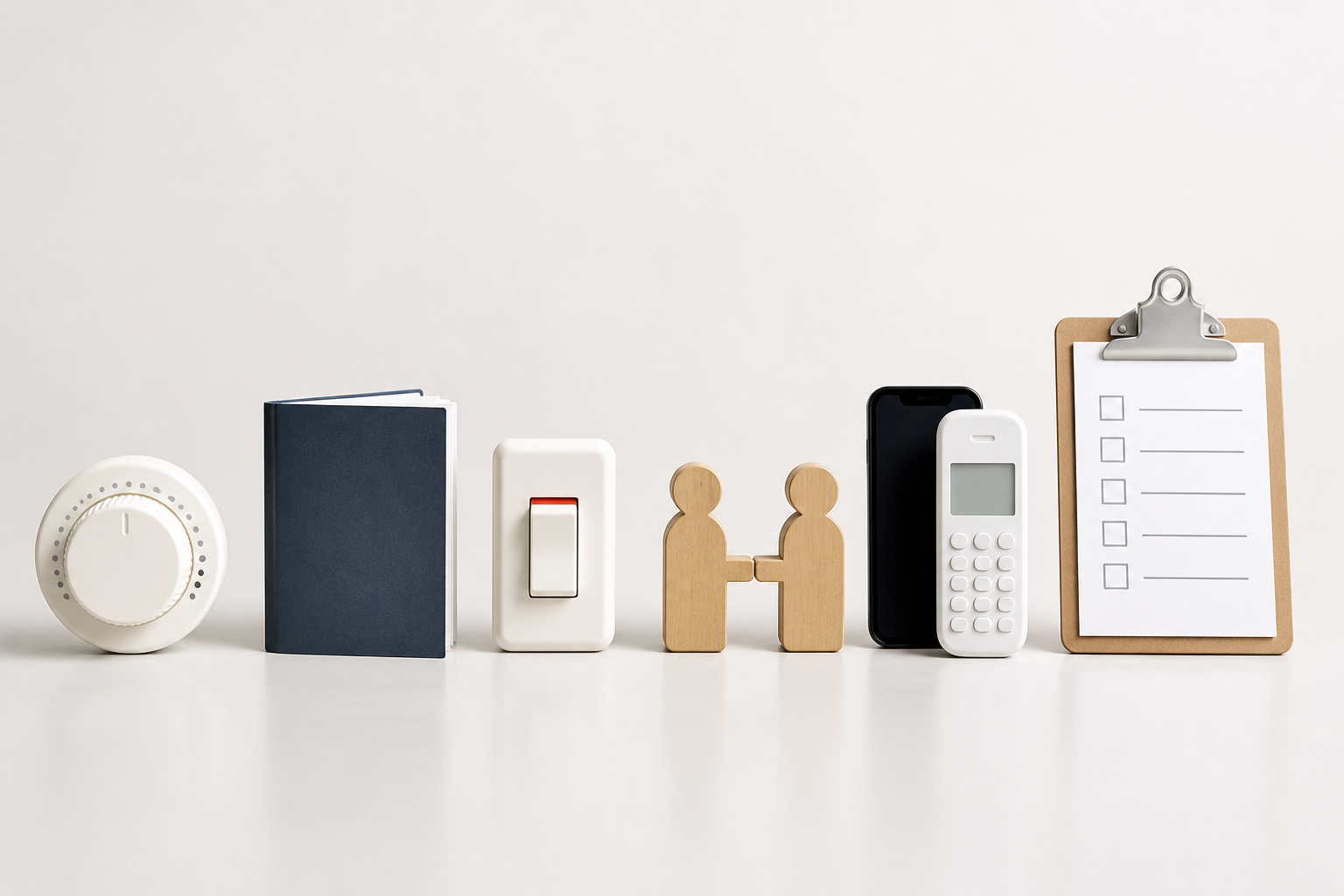
For customer messaging, personality is not a fictional backstory (“I am Luna, a golden retriever who loves skincare”). It is the stable pattern of:
- Register — formal ↔ casual
- Warmth — brisk ↔ caring
- Humor — none ↔ light ↔ playful
- Directness — softener-heavy ↔ straight answers
- Identity disclosure — when and how you say you are AI
- Boundaries — what you refuse, escalate, or never joke about
It differs from a blog style guide because messaging has state (order status), policy constraints, and escalation duties. Background: What Is AI Personality?.
Who should use this
Founders, support leads, marketing owners, and ops managers who use (or will use) AI in SMS, email, chat widgets, WhatsApp Business, or Apple Messages for Business. You do not need to be a copywriter. If someone has said “that doesn’t sound like us,” this guide is for you.
Prerequisites
- 20–50 real customer messages (redact PII).
- 5–10 gold human replies leadership likes.
- 5 never-send anti-examples.
- One-page industry / customer / non-negotiables note.
- Access to edit system prompt / guidance in your tool.
- A staged rollout path (even “AI drafts, human sends” for two weeks).
Who should NOT rush
Delay auto-send personality work if:
- FAQs and policies are still wrong — fix knowledge first (FAQ training).
- Nobody will review transcripts weekly.
- Leadership wants “more vibes” without a 30-ticket eval.
- You lack crisis / abuse / regulated-advice handoffs.
- You plan to paste long email prose into SMS and call it done.
Quick recommendation
Things to consider before choosing
- Brand risk — Clinic ≠ DTC streetwear.
- Channel mix — SMS length vs email structure vs WhatsApp pace.
- Instructions vs knowledge — Voice in instructions; prices/policies in knowledge.
- Disclosure & handoff UX — “Reply HUMAN” must work.
- Industry constraints — Health/finance/legal-adjacent need restraint.
- Eval capacity — Two reviewers (ops + brand) beat one enthusiastic founder.
- Model changes — Re-run the 30-ticket set after vendor upgrades.
- Quiet hours — Personality does not excuse 11:40 p.m. pings.
Key features of a messaging personality system
Tone dials with defaults
Example dental clinic: friendly-professional; high warmth; rare gentle humor; medium-high directness; early disclosure; no diagnosis jokes / no billing shame.
Obeyable voice brief
Audience, promise, 3–5 adjectives, Do/Don’t, signatures, banned phrases, emoji policy, disclosure line, gold + anti examples. Under two pages.
Humor policy
Default off; light warmth OK; playful only on tagged low-stakes flows; hard-off on negative sentiment.
Escalation table
Insults, refunds, medical/legal/tax asks, third contact, VIP, emergencies — short de-escalate + human.
Channel envelopes
Same core adjectives; different length and polish.
Eval scorecard
Correctness, brand match, empathy without slime, safety, escalation appropriateness.
Soft-launch loop
Draft → edit log → brief updates → narrow auto-send.
Maintenance owner
Monthly review; versioned changes; one source of truth.

Best-for table
| Business | Default dials | Auto-send first |
|---|---|---|
| Neighborhood retail / bakery | Clear, warm, no sarcasm | Hours, pickup windows |
| Home services | Practical, friendly | Scheduling confirms |
| Dental / clinic | Calm, clear, humor rare | Appointments only |
| DTC lifestyle | Casual peer if brand evidence | Shipping / sizing FAQs |
| B2B SaaS | Professional coworker | Password reset / status |
| Finance / insurance | Formal, no playful money talk | Scripted disclosures + human |
Pricing in 2026
Personality design itself is free — you pay for the messaging stack and review time.
| Stack | Typical cost shape | Personality controls |
|---|---|---|
| Intercom Fin | Seats + per-outcome AI fees (confirm on Intercom) | Tone presets + Guidance (docs) |
| Tidio / web chat | Base + AI conversation quotas | Bot / AI tone fields |
| ChatGPT Custom GPT | ChatGPT plan | Instructions + files |
| Claude Projects | Claude Pro/Team (pricing) | Project instructions + samples |
| SMS / WhatsApp via Twilio-class MSP | Usage fees | System prompt you maintain |
| Apple Messages for Business | Free Apple registration + MSP fees; live agent required per Apple FAQ | Same persona, higher polish |
Budget human edit time in weeks 1–2 — that is the real cost of getting voice right.
Pros and cons
Pros
- Makes AI replies recognizable and trustworthy
- Cuts off-brand jokes and risky improvisation
- Creates one brief for staff, contractors, and models
- Improves escalation quality before auto-send
- Gives leadership evidence when they want “more personality”
Cons
- Takes focused setup time and transcript review
- Presets alone are not a full brand bible
- Over-mirroring slang can feel mocking
- Multilingual voice needs native review
- Model upgrades can reintroduce drift
Best use cases / worked example
Neighborhood bakery (SMS + email)
Dials: clear, warm, no sarcasm; humor rare; emoji only on marketing blasts.
Customer SMS: “u open sunday? need birthday cake pickup”
Weak: “Heya sweet tooth!! We’re basically always baking magic—slide thru Sunday??”
Strong: “Yes—we’re open Sunday 9–2. For birthday cake pickup, reply with the name on the order and your pickup window. Need a person? Reply HUMAN.”
Why it wins: answers the question, one next step, escalation path, professional-warm, no unearned intimacy.
Email variant: same adjectives; subject “Sunday hours + cake pickup”; short paragraphs; order lookup link; phone in signature.
Other high-ROI starts
Appointment confirms (AI appointment scheduling), FAQ deflection, shipping status, receptionist after-hours with tight boundaries (AI receptionist).
Limitations
- A voice brief cannot fix wrong policies or missing FAQ content.
- Apple Messages for Business is not “turn on personality” — MSP + human escalation are required.
- CSAT can look fine while reopen rates rise — measure both.
- Machine-translated “voice” often breaks; native speakers must review gold examples.
- Crisis and self-harm paths need protocols, not witty empathy.
- This is operational guidance, not legal advice for regulated industries.
Comparison tables
Table 1 — Tone spectrum (pick a safe default)
| Tone | Example line | Best for | Risk |
|---|---|---|---|
| Stiff corporate | This message confirms your appointment for Tuesday at 15:00. | Rare B2B formal | Cold / robotic |
| Professional warm | You’re all set for Tuesday at 3:00 PM. Reply if you need to reschedule. | Most SMBs | Low |
| Casual peer | See you Tuesday at 3! | Youth DTC with evidence | Too light on money/care |
| Hyper-playful | Tooth fairy calendar says Tuesday at 3—don’t be late | Marketing blasts only | High on care/billing |
Table 2 — Channel envelope matrix
| Channel | Length | Warmth expression | Notes |
|---|---|---|---|
| SMS | 160–300 chars when possible | Clarity > emoji | One question max |
| Short paragraphs + bullets | Slightly more formal for B2B | Subject line carries tone | |
| Conversational back-and-forth | Natural but bounded | Respect quiet hours | |
| Apple Messages for Business | Polished + structured UI | Intimate — mistakes feel personal | Use rich cards for tasks |
| Web chat | Short–medium | Match site brand | Easy human takeover |
Decision matrix
Score 1–5 before auto-send expansion:
| Criterion (weight) | Hours-only auto | Shipping/status auto | Billing auto | Full auto all intents |
|---|---|---|---|---|
| Edit rate in draft mode (×3) | ||||
| Safety score on eval set (×3) | ||||
| Escalation accuracy (×3) | ||||
| Brand-match average (×2) | ||||
| Staffing for takeover (×2) | ||||
| Weighted total |
Rule: billing and care intents stay draft or human until safety and escalation scores are boringly good.
Setup checklist
- Six dials written with defaults
- Three owned adjectives + two refused adjectives
- Voice brief ≤2 pages with gold + anti examples
- Banned phrases + emoji policy + disclosure line
- Humor policy (default off + hard-off triggers)
- Escalation table in the same doc
- Channel matrix completed
- 30-ticket eval set built (routine / messy / angry / sensitive)
- Two reviewers scored drafts
- Soft launch: human on send; edit reasons logged
- Lowest-risk intent auto-send only after edit rate drops
- Owner + monthly maintenance calendar
Step-by-step design method
1. Define personality as operations
Write the six dials. Link market context from Cognition–Poke only as motivation — your brief must still match your brand.
2. Map the tone spectrum
Place your brand on: stiff → professional warm → casual peer → hyper-playful. Most SMBs win at professional warm.
15-minute exercise: rewrite “Your appointment is Tuesday at 3” in four tones; circle what a skeptical customer trusts.
3. Write the obeyable brief
Audience, promise, adjectives, Do/Don’t, signatures, bans, emoji, disclosure, 5 gold, 5 anti with reasons. Paste into agent instructions; keep a longer human doc linked.
OpenAI’s prompt personalities framing applies: personality steers how answers feel; it should not replace task/policy instructions.
4. Set humor rules
Allow when customer initiated playfulness, topic is low stakes, brand already jokes in human replies, and the joke does not punch down. Hurt when anger, money, health, legal rights, factual uncertainty, or unclear culture.
5. Write escalation before cleverness
| Trigger | Agent behavior |
|---|---|
| Insults / threats | Short de-escalate + human |
| Refund / chargeback language | Confirm understanding + human or policy script |
| Medical / legal / tax advice | Refuse advice; licensed/human path |
| “Are you a robot?” | Disclose; continue helpfully |
| Same issue third contact | Human |
| VIP flag | Human / senior queue |
| Suspected emergency / self-harm | Crisis protocol — not witty empathy |
Train humans so customers do not re-explain from zero (customer service automation).
6. Adapt by channel
Shorten for SMS, structure for email, converse for WhatsApp, polish for Apple Messages — without changing core adjectives. For Apple’s human-agent requirements, see Apple Messages for Business FAQ.
7. Disclosure and continuity
Disclose AI early on first automated touch. Offer HUMAN handoff. When a person takes over, name them. Avoid fake employee names unless counsel and brand approve and disclosure stays clear. Kill repetitive “Hi! Thanks for reaching out!” every turn.
8. Test with real tickets
30 tickets: 10 routine, 10 messy, 5 angry, 5 sensitive. Score 1–5 on correctness, brand match, empathy, safety, escalation.
Soft-launch bar: average ≥4.0 brand match and safety; zero critical safety fails; escalation correct on ≥90% of angry/sensitive.
9. Soft-launch with humans on send
Weeks 1–2: draft → human edit <2 minutes → log edit reasons → update brief twice weekly → auto-send only lowest-risk intent.
10. Compliance-sensitive restraint
Not legal advice — operational caution:
- Healthcare-adjacent: no diagnosis, no “you’ll be fine,” scheduling-focused calm.
- Finance: no approval/return guarantees; no playful “get rich” talk; scripted disclosures.
- Any sector: no full card numbers/SSNs over SMS; never ask for passwords (see AI phishing protection).
11. Measure CSAT without gaming yourself
30 days pre/post: CSAT on bot threads, reopen ≤72h, escalation rate + escalation CSAT, draft edit rate, containment only if quality holds, SMS opt-out/block rate. Weekly: read 20 transcripts aloud — cringe means out of brand.
12. Maintain like a product
One owner. Monthly 30 minutes: new bans, seasonal shifts, channel updates, re-run eval after model changes. Version the brief.
Prompt pattern to paste
You are {{brand}}'s messaging assistant for {{channel}}.
Dials: register={{}}, warmth={{}}, humor={{default off}}, directness={{}}.
Adjectives: {{3–5}}. Never: {{refused}}.
Banned phrases: {{list}}.
Disclosure (first automated touch): "{{line}}".
If customer asks for a human, is angry, mentions refund/chargeback, or asks for medical/legal/tax advice: {{escalation behavior}}.
Match gold examples; avoid anti-examples.
SMS: under {{n}} characters, one question max.
Do not invent policies. If unknown, say so and escalate.
Common mistakes
- One-liner: “Be friendly and fun.”
- Copying a viral brand’s voice that isn’t yours.
- Joking through an apology.
- Fake human names without disclosure.
- Pasting email prose into SMS.
- Optimizing only for containment %.
- Marketing writes voice; support discovers it in production.
- No crisis / abuse protocol.
- Collecting sensitive data in casual chat tone.
- Never re-testing after a model or vendor change.
- Declaring victory after twelve “lol thanks” texts.
- Turning all intents to auto-send after one good demo.
Alternatives and tool comparison
| Approach | Speed to ship | Brand depth | Best when |
|---|---|---|---|
| Helpdesk tone presets (e.g. Fin) | Fast | Medium | Support org already on Intercom |
| Website chat (e.g. Tidio) | Fast | Medium | Lead + FAQ on site |
| Custom GPT / Claude Project | Medium | High | Rich samples + multi-channel drafts |
| Full custom API agent | Slow | Highest | Multiple products share one versioned brief |
| Human-only messaging | Immediate quality | Perfect | Volume still tiny |
Practical take: Presets get you live; a written brief makes you on-brand. Do not skip the 30-ticket eval because a competitor demo felt “more personality” — run the bolder brief through the scorecard and compare safety deltas.
Suggested articles to publish next
- Downloadable AI messaging voice-brief template
- 30-ticket personality eval spreadsheet for SMBs
Frequently asked questions
Should the agent mirror the customer’s slang?
Light mirroring of formality is fine. Heavy slang, memes, or emoji mirroring can feel mocking or dated. Prefer your brief over mimicry.
How is this different from a general LLM writing style?
Customer messaging has state, policy constraints, and escalation duties. A blog voice guide is not enough; you need operational rules and ticket tests.
What if leadership wants “more personality” after a competitor demo?
Run the 30-ticket eval with the bolder brief. Show safety and brand-match deltas. Decide with evidence, not FOMO from acquisition headlines.
Can one personality cover sales and support?
Often yes at the adjective level, with different playbooks: sales slightly warmer; support more direct and reassuring. One brief with two scenario sections beats two conflicting bots.
How do multilingual teams handle personality?
Keep adjectives constant; decide language matching rules; have a native speaker review gold examples per language.
Does Apple Messages for Business need a different persona?
Same persona, higher polish and richer UI. Use business chat features for structured tasks so personality isn’t doing the job of a button.
How soon can we auto-send?
After draft mode produces low edit rates on a narrow intent — usually weeks, not one enthusiastic afternoon.
Where should refund windows live?
In the knowledge base / policy docs — not buried only inside personality adjectives.
Final recommendation
AI agent personality is brand operations, not decoration. The market may reward distinctive assistants, but small businesses win by being reliable and recognizable.
Build a short voice brief with examples, set humor and escalation rules, adapt to each channel, test on real tickets, soft-launch with humans in the loop, and measure CSAT alongside reopen and safety metrics.
Ship the boring version of your voice first. Earn the right to be playful only where customers already trust you.
Key takeaway
Brand-safe AI agent personality for SMS, email, WhatsApp, and Apple Messages for Business: tone dials, voice brief, humor rules, escalation, ticket evals, soft launch, and CSAT measurement. For more step-by-step guides, browse our blog or explore Productivity.
Frequently asked questions
Should the agent mirror the customer’s slang?
Light mirroring of formality is fine. Heavy slang, memes, or emoji mirroring can feel mocking or dated. Prefer your brief over mimicry.
How is this different from a general LLM writing style?
Customer messaging has state, policy constraints, and escalation duties. A blog voice guide is not enough; you need operational rules and ticket tests.
What if leadership wants “more personality” after a competitor demo?
Run the 30-ticket eval with the bolder brief. Show safety and brand-match deltas. Decide with evidence, not FOMO from acquisition headlines.
Can one personality cover sales and support?
Often yes at the adjective level, with different playbooks: sales slightly warmer; support more direct and reassuring. One brief with two scenario sections beats two conflicting bots.
How do multilingual teams handle personality?
Keep adjectives constant; decide language matching rules; have a native speaker review gold examples per language.
Does Apple Messages for Business need a different persona?
Same persona, higher polish and richer UI. Use business chat features for structured tasks so personality isn’t doing the job of a button.
How soon can we auto-send?
After draft mode produces low edit rates on a narrow intent — usually weeks, not one enthusiastic afternoon.
Where should refund windows live?
In the knowledge base / policy docs — not buried only inside personality adjectives.
Written by
AI Growthub StaffEditorial Team
The AI Growthub editorial team covers practical AI news, tools, and workflows for small business owners. Every article is fact-checked against primary sources before publication.
Comments are coming soon
We’re building a discussion space for business owners. Until then, reply to any newsletter issue — we read everything.
Related posts
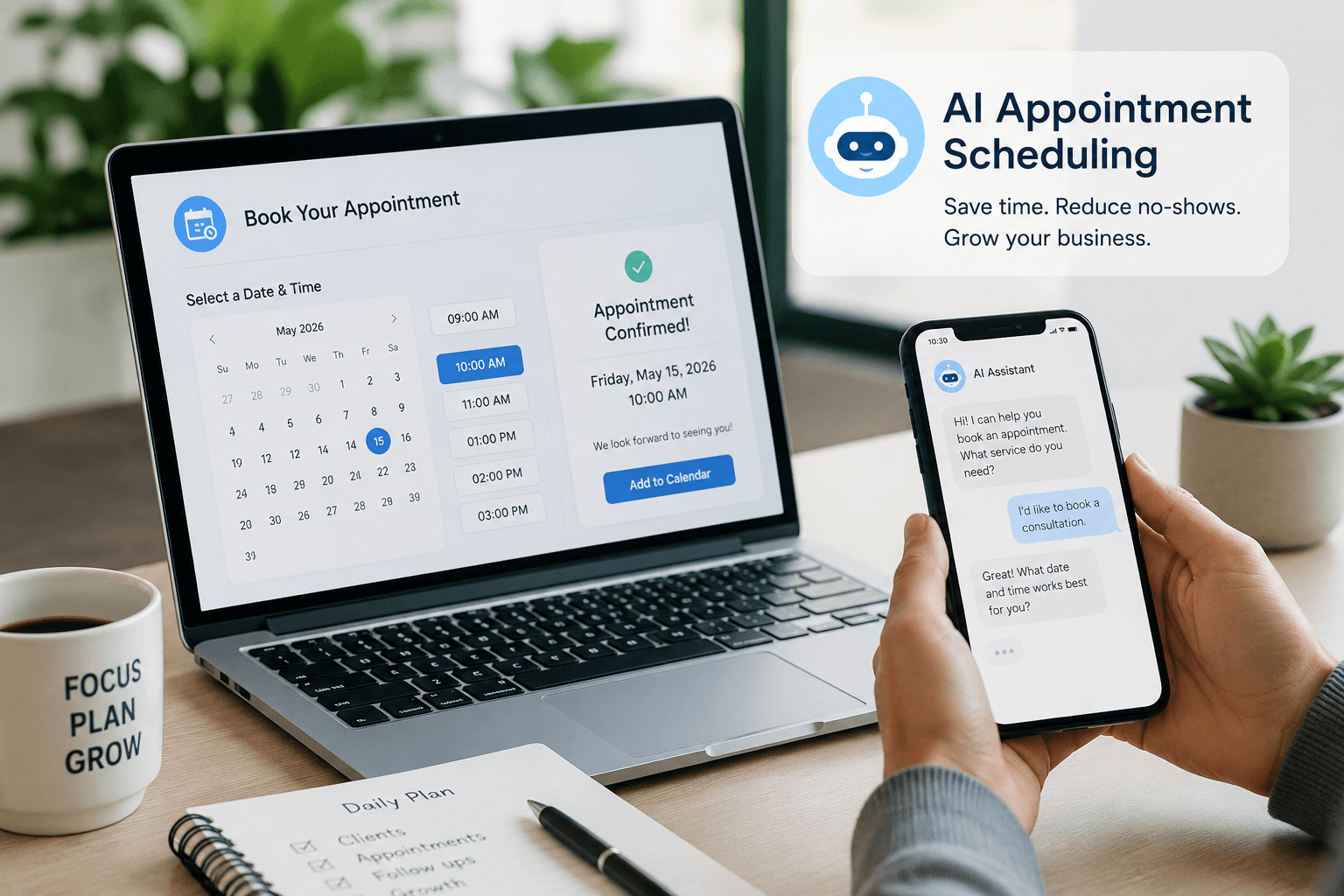
AI Appointment Scheduling for Small Business: The Complete 2026 Guide
Compare booking links, service platforms, calendar AI, and voice agents — with 2026 pricing, decision matrices, and setup checklists for SMBs.

Notion AI for Small Business: The Complete 2026 Guide
Notion AI for small business in 2026: Business vs Plus plan matrix, Notion Agent vs Custom Agents, credits pricing, decision framework, and when Gemini or Copilot wins.

Gemini for Google Workspace (2026): The Complete Guide
Use Gemini for Google Workspace: Starter vs Standard plan matrix, Gmail/Docs/Sheets setup, Gems, Gemini Notebook, pricing, and when ChatGPT or Claude wins.
The AI edge, delivered every Tuesday
One 5-minute email: the tools worth your money, the plays that are working right now, and zero hype. Unsubscribe anytime.
No spam. No selling your data. Read by owners of restaurants, gyms, clinics, and agencies across the US, UK, Canada, and Australia.